
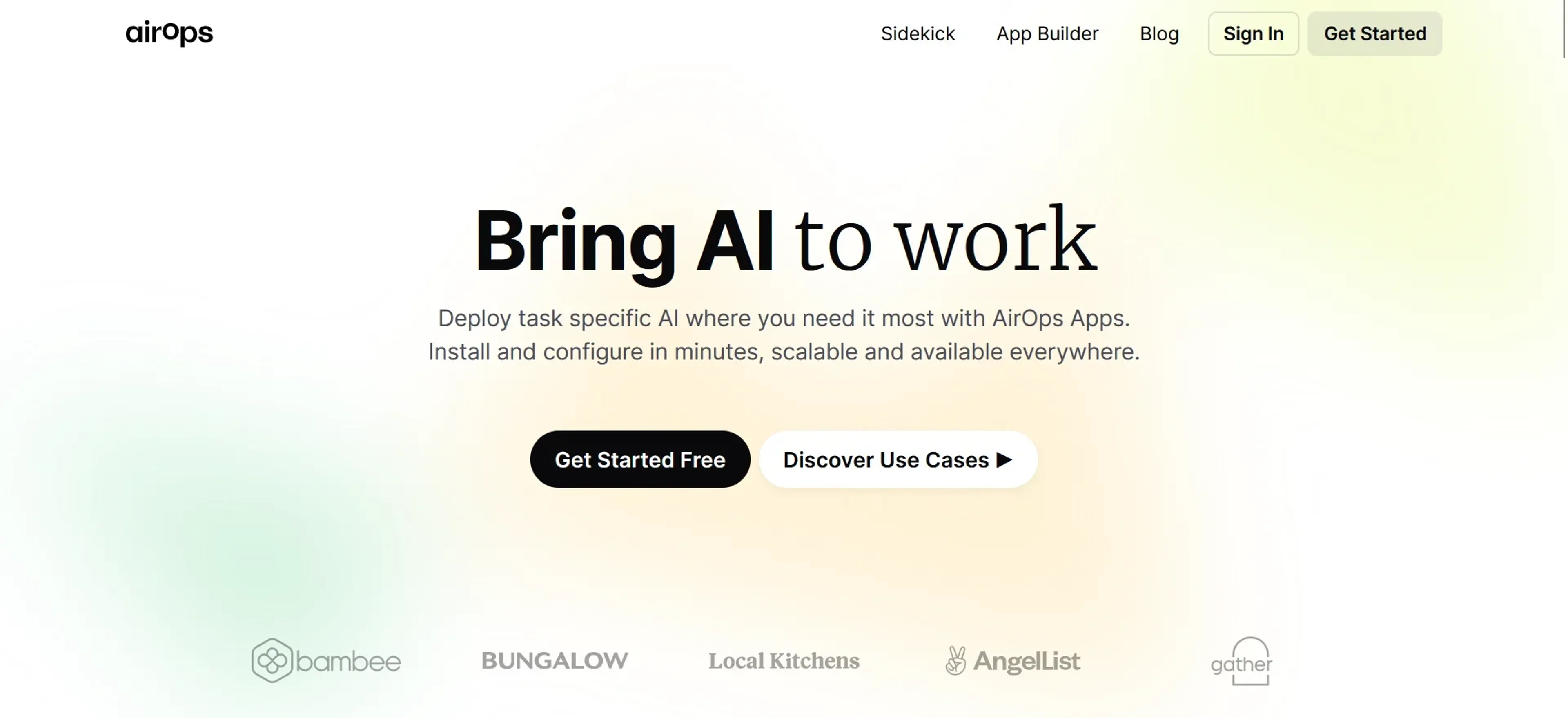
About AirOps
AirOps is a platform for building, testing, and deploying AI-powered applications and workflows. It integrates advanced models like GPT-4-turbo, DALLE-3, and Claude 2, enabling users to create custom AI apps without extensive coding. Features include batch operations, managed memory stores, customizable templates, and prompt engineering tools. AirOps supports deployment via REST API and SDKs, making it suitable for businesses and developers looking to scale AI across critical processes. Use cases range from data analytics and content generation to SQL query optimization and chatbot creation.
Key Features
- AI Workflows: Streamline complex tasks with AI-driven workflows that can be scaled to meet business needs.
- Custom App Builder: Provides the tools necessary to build tailored AI applications without extensive coding knowledge.
- Batch Operations: Run AI tools and workflows in bulk, saving time and resources.
- Memory Stores: Improve app quality with managed databases that integrate your data and domain knowledge.
- Templates: Jumpstart creation with customizable templates for chatbots, tools, and workflows.
- Prompt Engineering: Test and refine prompts to optimize AI performance across various models.
- Integration and Deployment: Deploy AirOps apps easily with REST API, SDKs, and more, ensuring flexibility across different platforms.
Pricing Details
- Free Trial: New users can explore the features of AirOps with an initial free trial period.
- Subscription Plans: Detailed pricing plans are available upon request or registration on the AirOps website.
Pros
- Efficiency: Reduces the time and effort required to build and deploy AI applications.
- Ease of Use: Offers a user-friendly interface with templates and drag-and-drop elements for quick development.
- Customization: Tailored solutions are possible with a versatile app builder and managed memory stores.
- Scalability: Suitable for businesses of all sizes, capable of handling batch operations and scaling as required.
Cons
- Learning Curve: New users may need time to get accustomed to the various features and workflow design.
- Model Dependence: Relies heavily on third-party AI models, which might affect performance and availability.
- Pricing Transparency: Detailed pricing information is not immediately evident, which may require direct inquiry.
Use Cases
- Tech Startups: Employing the tool to quickly develop and deploy AI features in their products.
- Data Analysts: Using the platform to automate data processing and gain insights with AI-driven analytics.
- Marketing Agencies: Leveraging the tool to create SEO-optimized content and improve digital strategies.
- AI Researchers: Benefiting from the tool's ability to test and refine AI models for academic purposes.
- Uncommon Use Cases: Utilized by non-profits to automate routine tasks, freeing up resources for their core mission; adopted by event organizers to create chatbots for real-time attendee engagement.