About Zapier
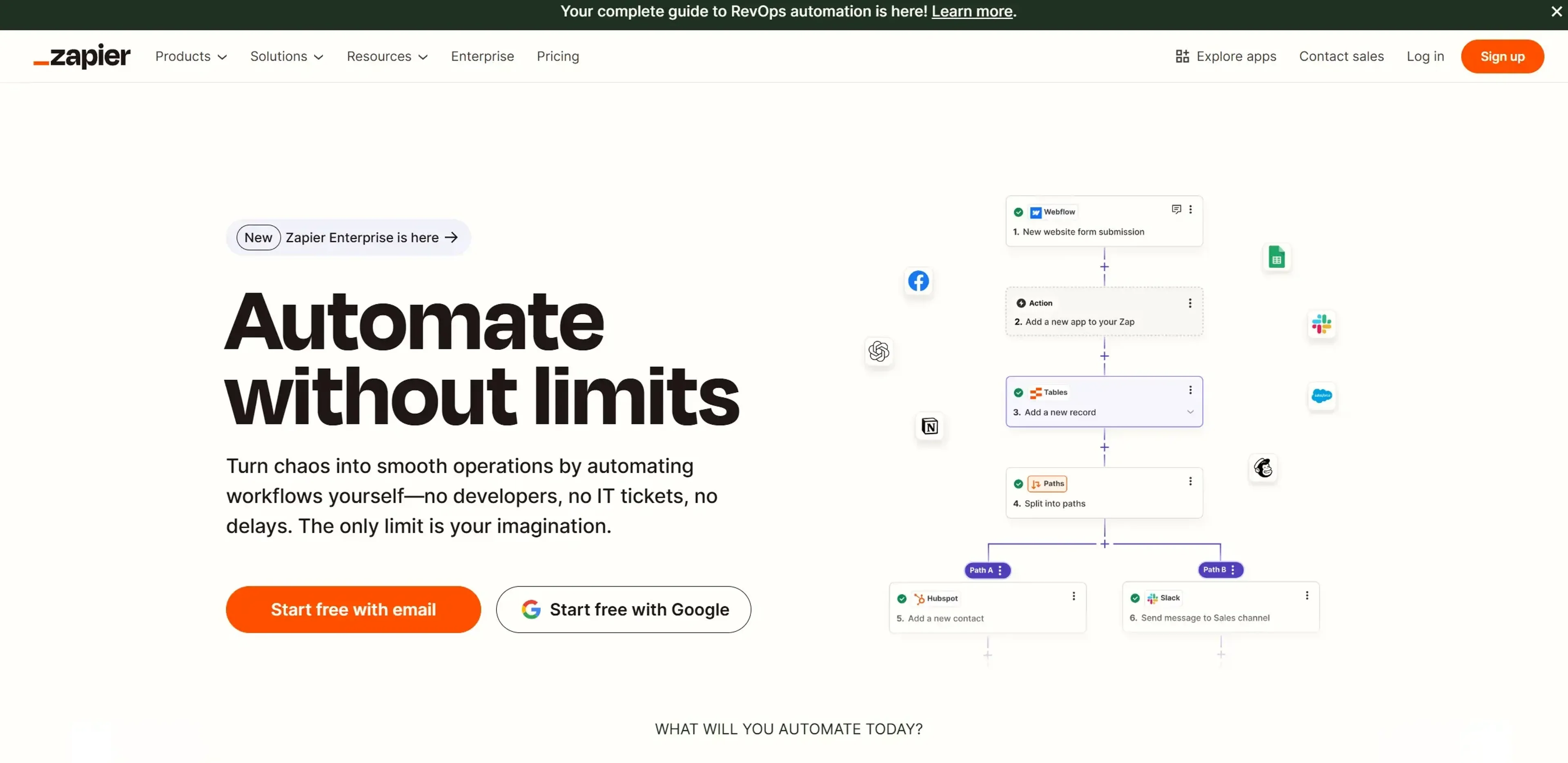
Zapier is a no-code automation platform that connects over 7,000 apps, enabling users to create automated workflows called Zaps. It eliminates repetitive manual tasks across marketing, data management, customer support, and more, without requiring coding or IT intervention. With AI-driven features, users can add intelligence to automations, such as summarizing sales calls or generating content ideas. The platform offers user-friendly interfaces for building apps, forms, and web pages, along with customizable workflows and a wide range of templates. Suitable for individuals and teams of all sizes, Zapier helps save time, reduce operational costs, and scale operations efficiently. Use cases include e-commerce order management, marketing campaign automation, IT support ticket handling, and sales lead management.
Key Features
- Extensive App Integration: Instantly connect with over 7,000 apps, ranging from CRM systems to social media platforms, enabling seamless workflow automation.
- AI-Driven Automation: Utilize AI by Zapier to incorporate intelligence into your workflows, such as summarizing sales calls or generating content ideas.
- User-Friendly Interfaces: Build apps, forms, and web pages effortlessly with a no-code interface, making automation accessible to everyone.
- Customizable Workflows: Tailor your automation processes with advanced customization options, ensuring they meet your unique business needs.
Pricing Details
- Free Tier: Start with a limited free plan to explore basic features.
- Starter Plan: Begins at $19.99 per month, offering more Zaps and premium app integrations.
- Professional Plan: Available at $49 per month, suitable for growing businesses needing advanced features.
- Team Plan: Priced at $299 per month, designed for larger teams requiring collaborative tools.
Pros
- Time Efficiency: Automates repetitive tasks, freeing up time for more critical activities.
- Scalability: Suitable for teams of all sizes, from solo entrepreneurs to large enterprises.
- Cost Savings: Reduces operational costs by automating tasks that would otherwise require manual intervention.
- Flexibility: Offers a wide range of templates and customization options to fit various business processes.
Cons
- Initial Learning Curve: New users may require time to explore and understand the full range of features.
- Complexity in Advanced Setups: While basic flows are easy to set up, more complex automations might need a deeper understanding of the platform.
Use Cases
- E-commerce Businesses: Streamlining order management and customer communication.
- Digital Marketing Agencies: Automating campaign management and lead generation.
- IT Departments: Managing support tickets and system alerts efficiently.
- Sales Teams: Enhancing lead management and sales handoffs.
- Uncommon Use Cases: Used by educational institutions to automate administrative tasks; Adopted by non-profit organizations for donor management.