
About Consensus
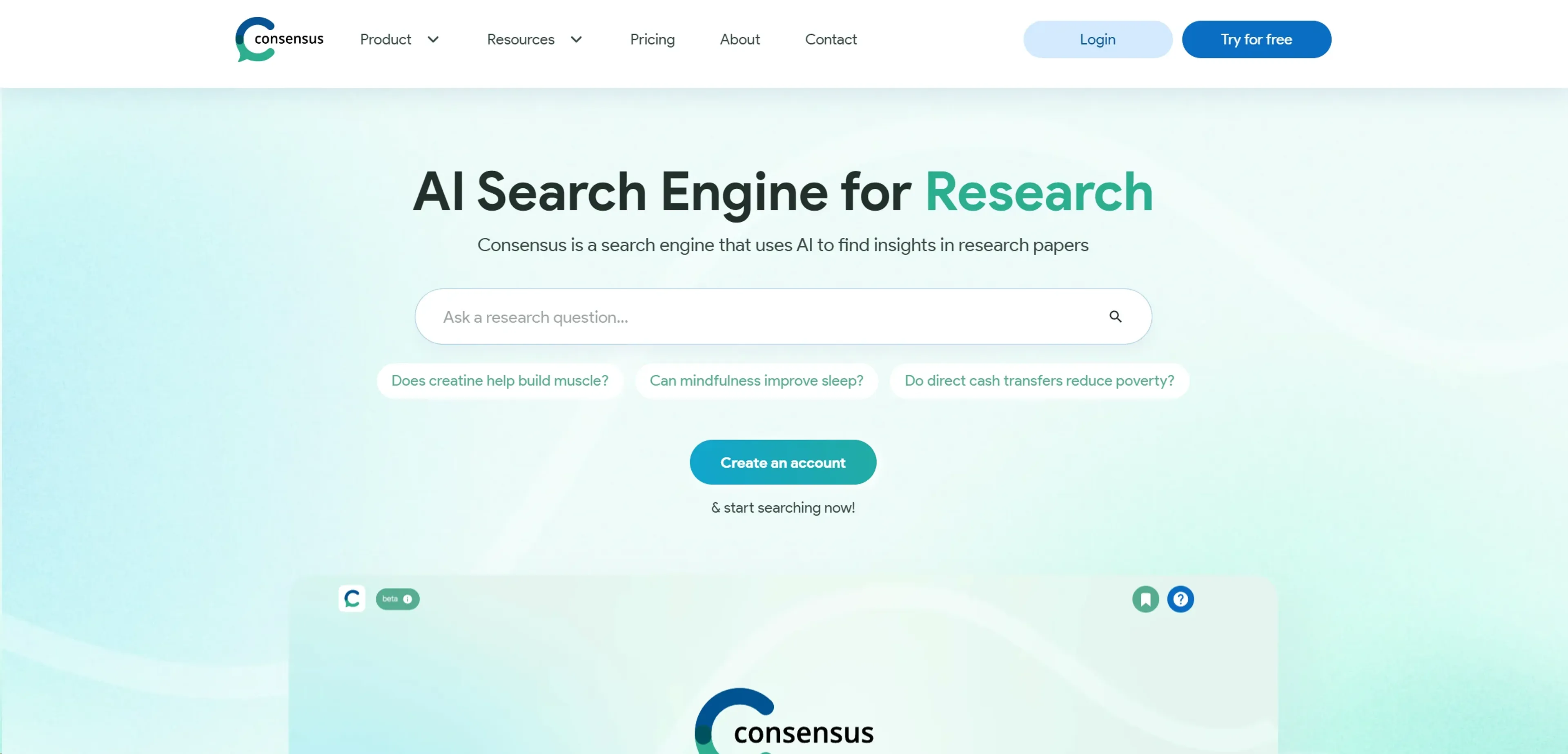
Consensus is an AI-powered search engine built for research, drawing on over 200 million scientific papers to deliver evidence-based answers without ads. Instead of keyword-matched web results, it returns studies directly tied to real research and uses GPT-4 and other LLMs to instantly summarize findings, making complex literature easier to digest. Researchers, students, clinicians, analysts, and content creators use it for literature reviews, evidence-based patient answers, expert quotes, and data-driven decisions. A free tier lets users explore the platform, with subscription plans starting at $8.99 per month for advanced features.
Key Features
- Extensive Coverage: With access to over 200 million scientific papers, Consensus offers unparalleled reach into the world of academic research.
- Results You Can Trust: Every result provided by Consensus is directly tied to an actual study, ensuring that users have verifiable sources for the information they obtain.
- Instant Analysis: Leveraging GPT-4 and other Large Language Models (LLMs), Consensus can quickly summarize research findings, making it easier to digest complex information.
- No Ads: The platform promises an ad-free experience, focusing solely on delivering quality research results without distractions.
Pricing Details
- Free Tier: Consensus offers a free trial, encouraging users to explore its features and capabilities without immediate commitment.
- Subscription Plans: While specific pricing details were not available, Consensus likely offers tiered subscription plans tailored to the needs of individual users and institutions.
Pros
- Time Efficiency: Significantly reduces the time spent on literature reviews and research by providing summarized results and direct access to scientific papers.
- Credibility: By linking directly to peer-reviewed studies, Consensus ensures the information's reliability and credibility.
- User-Friendly Interface: Designed with the user in mind, Consensus offers an intuitive experience that simplifies the research process.
- Innovative Technology: The integration of GPT-4 for instant analysis of research papers is a game-changer, offering insights that might otherwise take hours to uncover.
Cons
- Learning Curve: New users may need time to familiarize themselves with the platform's capabilities and how best to utilize its features for their research needs.
- Specialized Focus: While its specialization in academic and scientific research is a strength, it may not cater to those looking for broader types of information.
- Availability of Papers: Access to certain papers may be limited based on the user's institutional affiliations or the paper's availability online.
Use Cases
- Researchers: For conducting thorough literature reviews and staying up-to-date with recent studies.
- Students: To find supporting evidence for papers or to explore topics for academic assignments.
- Doctors and Clinicians: For quickly answering patient questions with evidence-based information.
- Analysts and Content Creators: To source expert quotes and peer-reviewed insights for reports, presentations, and blog posts.
- Health and Fitness Enthusiasts: Checking the effectiveness and viability of supplements and fitness routines.
- Uncommon Use Cases: Journalists using it to back their stories with scientific evidence; Policy makers leveraging it for data-driven decision making.