About AskYourDatabase
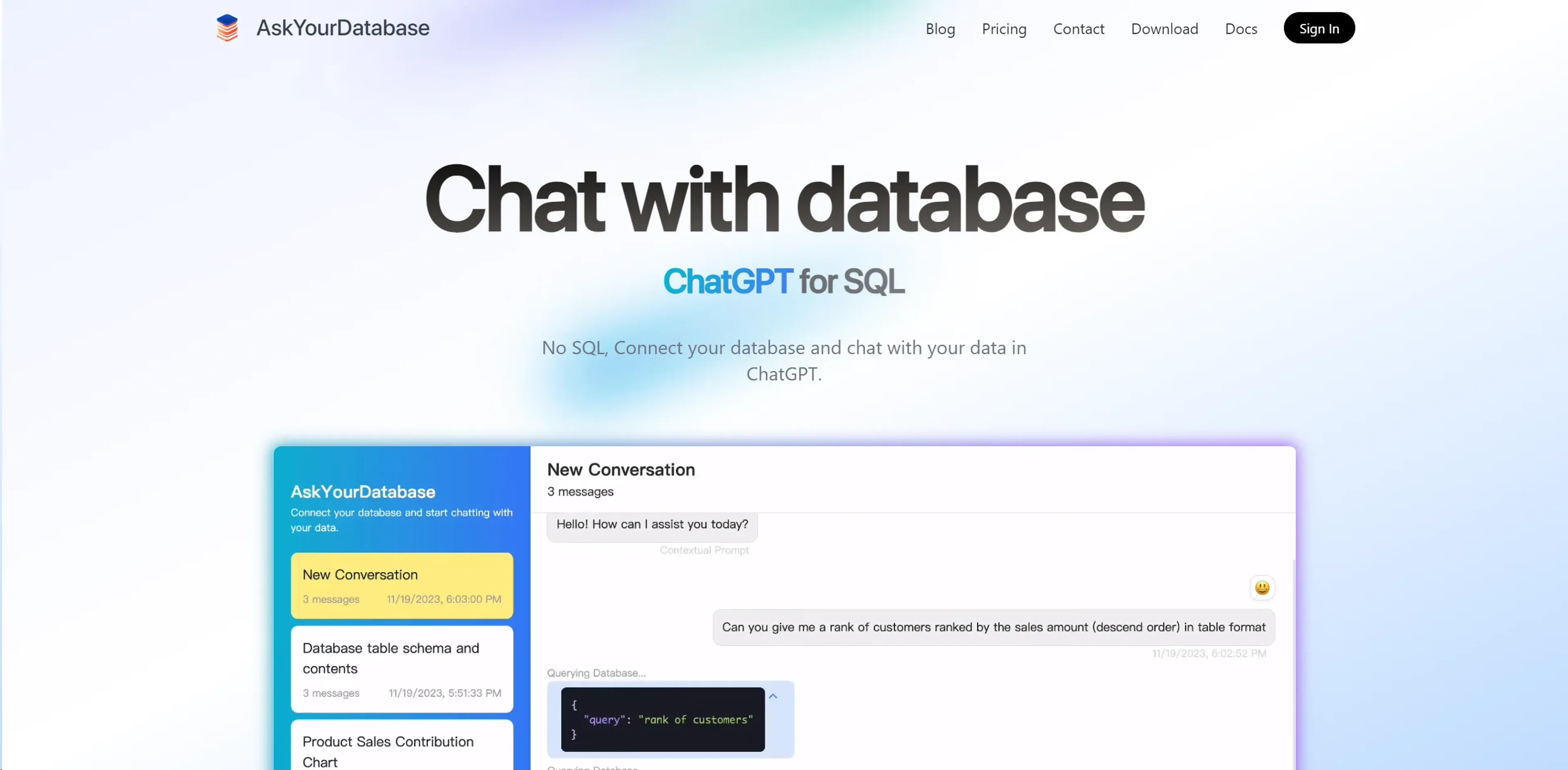
AskYourDatabase is an AI-powered chat interface that lets you query and manage SQL and NoSQL databases using natural language. It supports PostgreSQL, MySQL, Microsoft SQL Server, MongoDB, and Snowflake, and converts results into visual formats without coding. Schema design and migration tools simplify database management, while local desktop operation keeps credentials secure. Ideal for business analysts, data analysts, and SMEs, it reduces time spent on writing and debugging SQL queries, making database interaction accessible to non-technical users.
Key Features
- Chat Interface with AI: Allows users to query and manage databases through natural language dialogue.
- Support for Multiple Database Types: Compatible with popular databases like PostgreSQL, MySQL, Microsoft SQL Server, MongoDB, and Snowflake.
- No Code Data Visualization: Converts query results into clear, visually engaging formats without coding.
- Schema Design and Migration Tools: Facilitates database schema design and migration with minimal technical skills required.
- Security Focused: Operates locally on your desktop, ensuring database credentials and data remain secure.
Pricing Details
- Free Version: Offers basic features for simple database interactions.
- Pro Version: Priced at $50 per month, includes full features, support, and updates.
Pros
- Enhanced Accessibility: Makes database management easy for non-technical users.
- Time-Saving: Reduces time spent on writing and debugging SQL queries.
- Cost-Effective: Lessens the need for extensive training or specialized personnel.
- User-Friendly Interface: Simplifies complex database tasks with an intuitive chat-based approach.
Cons
- Learning Curve: Users may need time to adjust to the chat-based database interaction.
- Feature Limitations: May not fully replace all functionalities of traditional SQL management tools.
- Database Compatibility: New or less common databases might not be supported yet.
Use Cases
- Small to Medium Enterprises: For quick and efficient data queries and management.
- Data Analysts: To interpret large data sets without extensive SQL knowledge.
- Educational Institutions: Teaching database management in a more interactive and engaging way.
- Healthcare Providers: Managing patient data and hospital records more efficiently.
- Uncommon Use Cases: Non-profits managing donor databases; event organizers tracking participant data.