
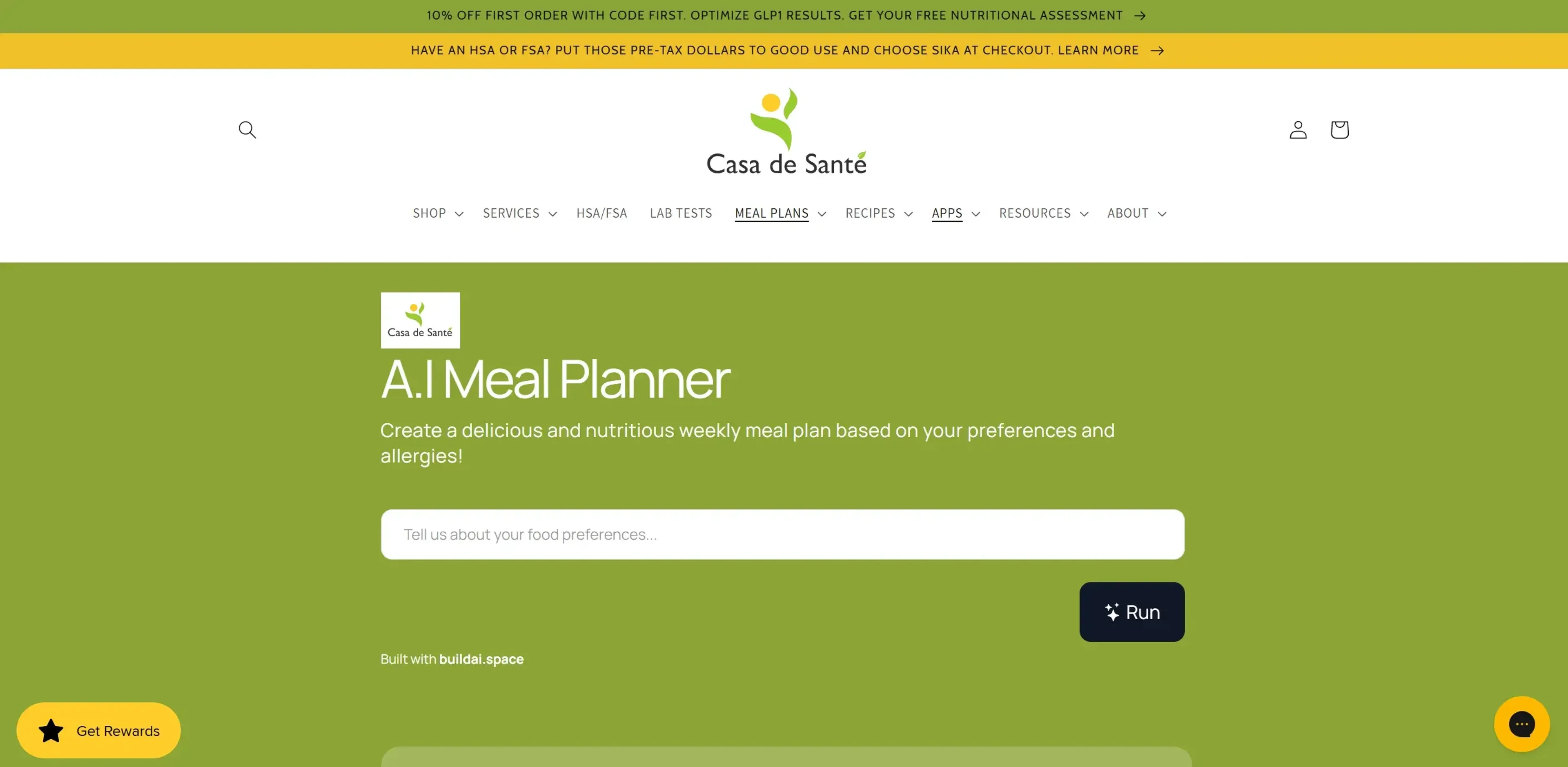
About AI Meal Planner
AI Meal Planner uses artificial intelligence to generate personalized meal plans based on your dietary restrictions, health goals, and preferences. It provides detailed nutritional analysis for every meal, smart grocery lists to reduce waste, and access to a large recipe database that fits your guidelines. Ideal for individuals with specific dietary needs like keto, vegan, or allergen-free, fitness enthusiasts tracking macros, busy professionals, and even healthcare providers. The tool automates meal planning and shopping, saving time while supporting balanced, health-focused eating. Available with free trial and subscription plans.
Key Features
- Personalized Diet Planning: Tailors meal plans to individual dietary restrictions, goals, and preferences using AI algorithms.
- Nutritional Analysis: Provides detailed nutritional information for every meal, ensuring balanced and healthy diet options.
- Smart Grocery Lists: Generates shopping lists based on the planned meals, minimizing food waste and streamlining shopping trips.
- Recipe Database: Offers access to a vast collection of recipes that fit within a user's dietary guidelines.
Pricing Details
- Subscription Plans: Monthly and yearly subscription options with varying levels of customization and support.
- Free Trial: A limited-time free trial to experience the AI Meal Planner features.
- Custom Plans: Pricing for custom plans available upon request.
Pros
- Time-Saving: Automates meal planning and grocery shopping, freeing up time for other activities.
- Health-Focused: Helps users maintain a balanced diet while meeting specific health goals.
- Personalized Options: Offers customization for various dietary needs such as keto, vegan, or allergen-free.
- Convenient: Easy-to-use interface that makes meal planning accessible to everyone, regardless of culinary experience.
Cons
- Limited Recipe Variations: Some users may find that the recipe options can be limited based on dietary restrictions.
- Requires Manual Input: While highly customizable, some users may need to manually input more complex dietary needs or preferences.
Use Cases
- Individuals with Dietary Restrictions: Those with specific health-related dietary needs such as low FODMAP, gluten-free, or allergen-free diets.
- Fitness Enthusiasts: Users who are tracking macronutrients and calories for fitness and weight management.
- Busy Professionals: People looking to minimize time spent on meal planning and grocery shopping.
- Healthcare Providers: Dietitians and nutritionists providing meal plans for their clients.
- Uncommon Use Cases: Used by culinary educators for teaching nutrition; adopted by food bloggers for creating tailored recipe content.